
Super Absorbent Dressings + Two-Layer Compression Heal Draining Leg Wounds
Advanced wound care protocol combining super-absorbent dressings, ORC/collagen/silver primary layers, and two-layer compression for exudative wounds.
Damon Ebanks
Medipyxis
Medical education note: This article is for clinicians and is not a substitute for patient-specific medical advice.
Why Heavily Exudative Lower-Extremity Wounds Are So Hard to Manage
Lower-extremity wounds—especially venous leg ulcers—are common in older adults. Between 1.5 and 3 in 1,000 people have an active leg ulcer, with prevalence reaching about 20 in 1,000 in those over age 80. These wounds are often chronic, painful, and recurrent.
Many lower-extremity wounds linked to venous insufficiency or edema are highly exudative. When dressings become overwhelmed by fluid output, patients experience "wet legs," odor, macerated periwound skin, and frequent leaks. This drives local inflammation, bacterial overgrowth, and delayed healing.
Super-Absorbent Dressings: Why They Matter in "Wet" Leg Ulcers
Super-absorbent polymer (SAP) dressings feature a high-capacity core that locks in fluid, even under compression, maintaining a moist wound surface without excess wetness. A recent systematic review found that super-absorbent dressings can improve exudate management, reduce dressing change frequency, and may support healing when used as part of good overall wound care.
Advanced Primary Dressings: ORC/Collagen/Silver and Hydrofiber With Silver
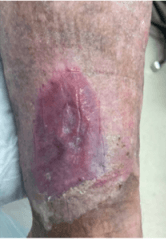
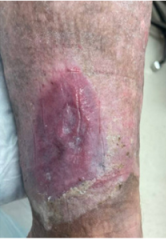 41-year-old patient with right leg venous leg ulcer after 42 days of treatment.
In the CS-045 series, wounds were managed with advanced primary dressings: either an oxidized regenerated cellulose (ORC)/collagen/silver matrix or hydrofiber with silver, placed directly on the wound bed before super-absorbent and compression layers.
Randomized and controlled studies show that ORC/collagen/silver dressings normalize the chronic wound micro-environment—binding excess proteases, supporting balanced moisture levels, and providing antimicrobial coverage.
Compression Wraps: The Non-Negotiable Pillar
Regardless of primary dressing sophistication, venous and edema-driven lower-extremity wounds won't heal reliably without adequate compression. Compression therapy significantly increases healing rates and reduces recurrence compared with no compression.
Two-layer compression systems such as Coban™ 2 have been directly compared to traditional four-layer systems in randomized crossover trials. In one 81-patient study, Coban 2 achieved similar healing but with less bandage slippage and higher patient preference.
Inside the CS-045 Case Series
Seven patients aged 41–88 presented with mixed lower-extremity wounds: skin breakdown from lymphedema blistering (1), fluid-overload ulcer (1), venous leg ulcers (3), vasculitic lesion (1), and traumatic ulcer (1). Most had significant comorbidities including previous VLUs, lymphedema, obesity, diabetes, vascular insufficiency, and prior endovenous ablation.
Each wound received an ORC/collagen/silver or hydrofiber-silver primary dressing, topped with super-absorbent secondary dressing, then secured with a two-layer compression wrap. Dressing changes occurred one to two times weekly depending on exudate volume.
Across the seven cases, clinicians observed increased granulation tissue, reduced wound area, and decreased exudate within 14–28 days. Four of the seven wounds achieved complete healing within 46 days.
Practical Takeaways for Clinicians
For heavily exudative lower-extremity wounds, especially with venous insufficiency or lymphedema, a layered approach makes sense:
- Use an active primary dressing (ORC/collagen/silver or hydrofiber-silver) to condition the wound bed.
- Add high-capacity super-absorbent dressing to manage fluid.
- Apply evidence-based compression after confirming arterial status.
Consider super-absorbent dressings when standard foams or gauze saturate before the next planned visit, when recurrent maceration occurs under compression, or when patients report constant leaking despite adequate compression therapy.
Bottom Line
Heavily exudative lower-extremity wounds need a coordinated plan: optimize the wound bed with advanced dressings, capture exudate with super-absorbent secondary layers, and correct venous hypertension with well-tolerated compression.
References
- CS-045 case series: Super-absorbent dressings + two-layer compression.
- O'Meara S, et al. Compression for venous leg ulcers. Cochrane Database Syst Rev.
- Coban 2 vs Profore RCT.
- ORC/collagen/silver for chronic wounds: meta-analysis.
- Super-absorbent dressings for chronic wounds: systematic review.