
Copper-Iodine Pocket Irrigation: 20-Patient Safety Study
Safety data on copper-iodine complex solution for breast implant pocket irrigation shows no adverse reactions in prospective 20-patient series.
Damon Ebanks
Medipyxis
Medical education note: This article is for clinicians and is not a substitute for patient-specific medical advice.
Quick Take
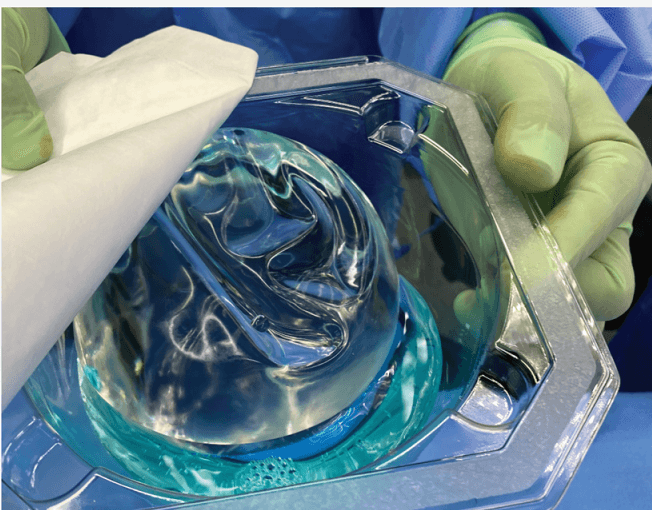
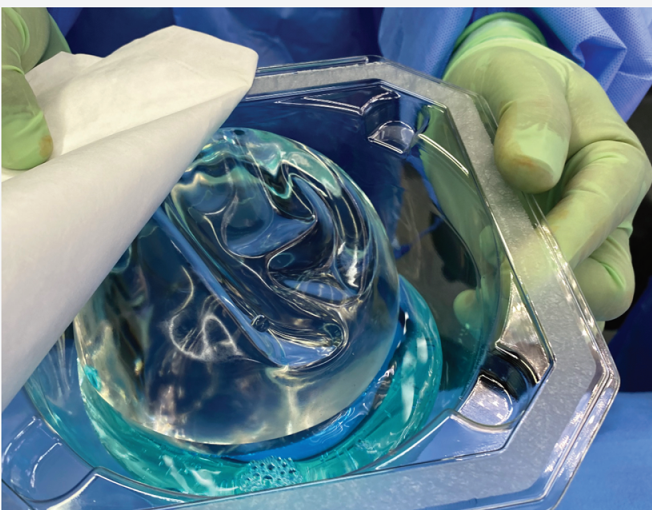 Implant bathed in CICS.
A prospective 20-patient bilateral breast reconstruction case series using Copper–Iodine Complex Solution (CICS) for implant pocket irrigation reported no local or systemic adverse reactions through routine follow-up spanning one year. The solution is characterized as broad-spectrum with antimicrobial persistence lasting 72 hours.
Study at a Glance
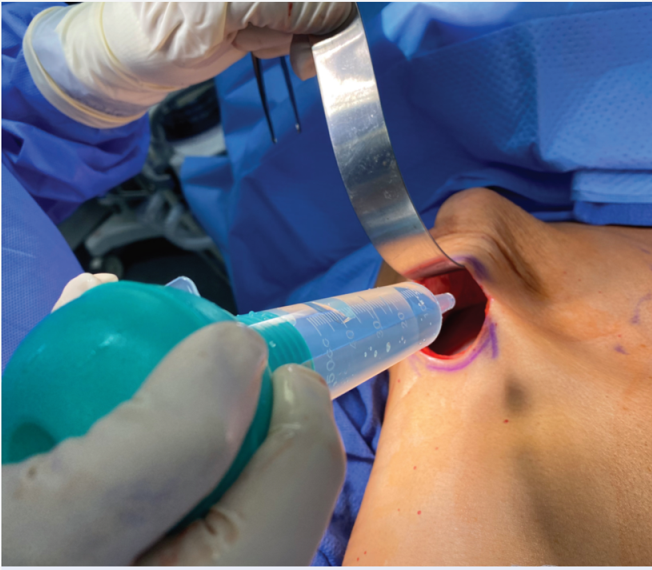 Irrigation of the breast pocket with CICS.
Design & Setting: Prospective safety series; 20 patients undergoing bilateral immediate reconstruction (40 pockets) between February and August 2022.
Technique: Submuscular pocket irrigated with CICS; implant immersed in solution before placement.
Follow-up Cadence: 3 days, 1 week, 1 month, 6 months, and 1 year.
Monitored Endpoints: Local and systemic reactions (rash, burning, swelling, allergy), early hematoma/seroma, and longer-term capsular contracture—no adverse reactions were reported.
Bottom Line: Early tolerability appears favorable, but comparative trials remain necessary to determine whether CICS meaningfully reduces surgical-site infection or capsular contracture relative to existing irrigants.
Why This Matters Now
In implant-based reconstruction, surgical-site infection and capsular contracture remain significant practice concerns. Published infection rates span roughly 0–29% depending on population and definitions, while capsular contracture incidence varies by technique and follow-up length.
How Copper-Iodine Compares With Common Irrigants
Povidone-Iodine (PI / "Betadine")
The FDA removed the Betadine warning against breast-implant exposure in 2017. Meta-analysis found lower rates of Baker III/IV capsular contracture with PI pocket irrigation compared with saline alone, though overall study quality was low to moderate.
Triple-Antibiotic Solutions (TAS)
A systematic review identified predominantly retrospective data with high risk of bias. A small controlled series found no significant difference in capsular contracture when TAS was compared with saline irrigation under optimized technique.
Chlorhexidine (CHX)
Multiple in-vitro and preclinical studies demonstrate dose- and time-dependent cytotoxicity at commonly used antiseptic concentrations.
Copper-Iodine Complex (CICS)
The 20-patient safety study showed no local or systemic adverse reactions through one-year follow-up, with broad-spectrum antimicrobial activity and extended persistence reported in preclinical testing.
Practical Considerations If You're Evaluating CICS
Use Within a Bundle, Not as Standalone: Continue standard perioperative antibiotics, no-touch technique, glove and field changes, meticulous hemostasis, disciplined implant handling, and appropriate drain strategy.
Consent & Documentation: Clarify during consent that current human data primarily establish safety signals rather than proven superiority. Document irrigant composition and volume, pocket characteristics, implant lot/serial.
Outcome Tracking: Track infection at standard surveillance timepoints (30 and 90 days and later), seroma and hematoma events, and standardized capsular contracture assessments.
Limitations of Current Evidence
The CICS breast pocket study is small (n = 20), lacks a comparator arm, and does not include formal infection or capsular contracture endpoints, so it should be interpreted as hypothesis-generating for safety rather than definitive for efficacy.
Bottom Line
CICS appears well-tolerated in a small prospective series of immediate implant-based reconstructions, with no reported adverse reactions and plausible antimicrobial rationale supported by broad-spectrum in-vitro activity and extended persistence data. For now it should be considered a promising adjunct within a standardized contamination-reduction bundle.
References
- CICS 20-patient safety study. SAWC Fall 2025.
- FDA removed Betadine implant exposure warning. 2017.
- PI pocket irrigation meta-analysis. Plast Reconstr Surg.
- Chlorhexidine cytotoxicity in wound cells. Int Wound J.