
Borate Bioactive Glass Matrix for Stalled Wounds: When to Add It
Three medically complex stalled wounds achieved closure or significant area reduction after boron-based bioactive glass fiber matrix application.
Damon Ebanks
Medipyxis
Medical education note: This article is for clinicians and is not a substitute for patient-specific medical advice.
Why Stalled Wounds Are So Hard to Restart
Chronic and complex wounds represent significant healthcare challenges, particularly among older and medically fragile patients dealing with edema, diabetes, vascular disease, or systemic illness. The TIME/TIMERS frameworks were developed because many wounds become stuck in chronic inflammation with slough, biofilm, and excess proteases blocking normal healing progression.
When standard interventions—debridement, infection control, moisture balance, off-loading, and compression—fail to produce results, clinical guidelines recommend considering advanced therapies such as cellular/tissue-based products or synthetic matrices to "reboot" the healing cascade.
What Is a Boron-Based Bioactive Glass Fiber Matrix?
BBGFM dressings consist of bioactive glass containing boron and other oxides, formed into soft, non-woven microfiber mats that conform to wound contours. Upon contact with wound fluid, the glass fibers gradually dissolve and release ions including calcium, sodium, phosphorus, and boron, creating an alkaline microenvironment that delivers signaling ions to local cells.
Research indicates these materials stimulate vascular endothelial growth factor (VEGF) production and promote endothelial tube formation, enhancing angiogenesis and soft-tissue regeneration. Because they are fully synthetic and bioresorbable, they avoid disease-transmission concerns associated with human or animal grafts and require no removal—native tissue gradually replaces them during healing.
Why Stalled Wounds Need More Than "Better Dressings"
TIME/TIMERS emphasizes that chronic wounds often fail due to persistent non-viable tissue, unmanaged inflammation or infection, excess moisture, and non-advancing edges—problems standard dressings cannot address alone. The TIMERS update explicitly adds Regeneration and Social factors.
Once wounds fail to show meaningful percent area reduction after several weeks of optimized standard care, clinicians should consider whether the wound bed needs a more active scaffold to restart healing.
Clinical Case Series Summary
The "Reviving Stalled Wounds" case series presents three medically complex patients with non-healing wounds that plateaued despite appropriate standard interventions:
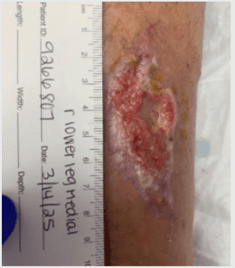
Case 1 – 93-year-old traumatic laceration
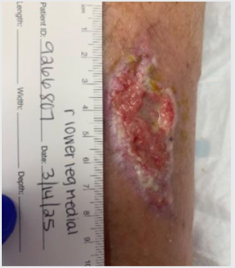 93-year-old with traumatic leg laceration.
Lower-extremity laceration remained open until BBGFM initiation; complete closure occurred approximately nine weeks later.
Case 2 – 64-year-old foot abscess
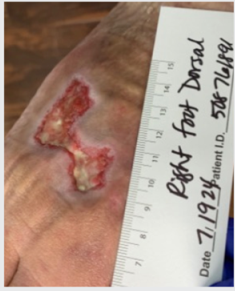 64-year-old with foot abscess and severe systemic disease.
Patient with portal hypertension, acute renal failure, and ascites achieved full closure within 16 weeks of BBGFM application after prolonged hospitalization.
Case 3 – 52-year-old post-arthroplasty wound
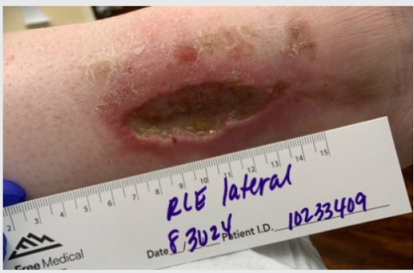 52-year-old post-arthroplasty wound post-MVC.
Non-healing wound following joint replacement and motor vehicle trauma showed 47.74% percent area reduction with robust granulation within six weeks of BBGFM application.
Evidence from Randomized Trials
A multi-center randomized controlled trial of diabetic foot ulcers found that adding a resorbable glass microfiber matrix to standard care significantly increased healing rates at 12 weeks compared with standard care alone. A subsequent trial in non-healing Wagner grade 1 DFUs similarly reported accelerated closure and improved percent area reduction versus control dressings.
Practical Clinical Pearls
Use the TIMERS framework as a checklist before considering BBGFM: have you optimized tissue debridement, managed inflammation/infection, balanced moisture, advanced edges, and addressed regeneration and social factors?
BBGFM functions as an adjunctive wound-bed therapy used on top of standard care including sharp debridement, infection management, exudate control, and appropriate off-loading or compression—not as a standalone cure.
Once the wound bed is clean and reasonably perfused, the matrix is trimmed to fit, placed in close contact with the wound surface, and covered with appropriate secondary dressing. Repeated applications are generally performed at weekly or bi-weekly intervals until the wound progresses or closes.
Which Stalled Wounds Might Benefit?
Escalation is recommended when wounds fail to show 30–50% percent area reduction after four to six weeks of optimized standard care, particularly in patients with multiple comorbidities. Candidates include:
- Frail elderly patients with traumatic lower-extremity wounds
- Individuals with severe systemic disease (liver failure, renal failure, advanced heart disease)
- Complex post-surgical wounds with adequate vascular supply but stalled healing
Bottom Line
Hard-to-heal wounds require structured wound-bed assessment (TIME/TIMERS) and timely escalation to advanced therapies when progress stalls despite fundamentals. Evidence from randomized trials and case series supports boron-based bioactive glass fiber matrices as resorbable, infection-resilient scaffolds that support angiogenesis and high-quality granulation.
References
- Reviving Stalled Wounds: BBGFM case series.
- Armstrong DG, et al. Resorbable glass microfiber matrix vs SOC RCT. Int Wound J. 2021.
- TIMERS framework update for wound bed preparation.
- WHS pressure injury treatment guidelines.