
CTPs Equalize Diabetic Wound Outcomes: 138-Patient Real-World Study
Real-world study shows cellular tissue products accelerate diabetic wound healing and eliminate healing disparities when initiated early after week 4.
Damon Ebanks
Medipyxis
Medical education note: This article is for clinicians and is not a substitute for patient-specific medical advice.
Overview
Chronic diabetic wounds represent a significant wound care challenge. This retrospective analysis of 138 patients evaluated how cellular and tissue products influence healing trajectories across different treatment stages.
Study Design
The research examined 138 patients in a mobile wound care setting, divided into:
- Diabetic cohort (n=46)
- Non-diabetic cohort (n=92)
Treatment groups included standard of care (SOC) alone, SOC with delayed CTP initiation, and early CTP utilization. Researchers measured wound area reduction, time to closure, CTP applications, and healing probability.
A Practical Escalation Workflow
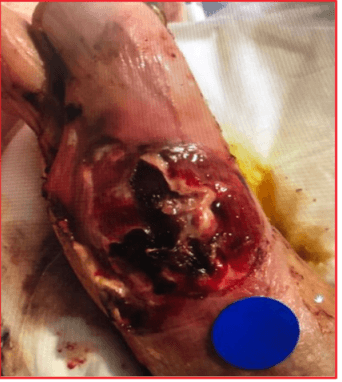
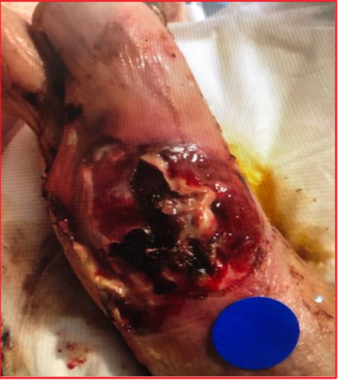 Patient with right foot arterial ulcer, initial visit.
Weeks 0–4: Optimize SOC
Begin with debridement, edema management, moisture balance, infection control, and perfusion assessment. Measure progress weekly using percent area reduction (PAR).
Week 4 Checkpoint (The 50% Rule)
If area reduction falls below 50%, escalate to CTP therapy. The study demonstrated a doubling in mean area reduction versus SOC by 12 weeks and shorter closure times with timely CTP introduction.
CTP Phase (Weeks 4–12)
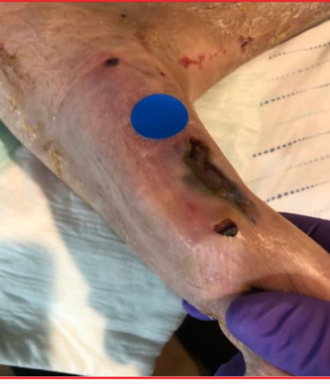 Patient with right foot arterial ulcer healed after 3 CTP applications over 12 weeks.
Apply CTPs per product instructions while continuing debridement and offloading. Expect early acceleration in tissue regeneration; 79% of wounds healed within 12 weeks after CTP initiation.
Coverage & Documentation
Align clinical notes with Medicare LCD L36690 requirements for lower-extremity CTPs, including week-4 metrics and ongoing optimization barriers.
Key Clinical Messages
For diabetic patients: Results indicate CTPs erased the diabetic penalty on healing speed at 8–12 weeks, eliminating delays when escalation occurs appropriately.
For program managers: Continuing SOC beyond week 4 without adequate progress extends time to closure; the median shifted from 13.5 to 18 weeks when CTPs were delayed.
For payers: The observed 85.5% versus 41.0% mean area-reduction difference at 12 weeks demonstrates clinically meaningful improvement affecting utilization, infection prevention, and amputation avoidance.
Timing Impact
Early CTP use associated with faster closure:
- 13.5 weeks with early CTP initiation
- 18 weeks with delayed CTP introduction
Nearly 79% of wounds achieved closure within 12 weeks following CTP introduction, supporting the week-4 reassessment benchmark.
Frequently Asked Questions
What Constitutes "Failed SOC"?
Wounds showing less than 50% area reduction by week 4 despite optimized standard care warrant CTP escalation.
Are CTPs Limited to Diabetic Foot Ulcers?
No. The program included diabetic foot ulcers and pressure injuries—applicable to chronic, nonhealing wounds that plateau under standard therapy.
Do Diabetics Still Heal Slower With CTPs?
In this series, healing rates between diabetics and non-diabetics became statistically equivalent at 8 and 12 weeks.
Expected Response Timeline After CTP Initiation?
While product-dependent, Kaplan-Meier analysis showed a steeper early healing trajectory with 79% closure by 12 weeks following CTP introduction.
Bottom Line
Early cellular and tissue product intervention after inadequate week-4 progress accelerated closure and eliminated the diabetic healing gap—a practical path to healing without disparity.
References
- CTP real-world study. SAWC Fall 2025.
- Medicare LCD L36690 Lower Extremity Skin Substitutes.
- CTPs vs SOC in DFUs systematic review.
- Wound bed preparation and 50% rule.