
NPWTi-d in 30 Patients: Settings, Usability & Early Outcomes
A Malaysian wound-care unit evaluated NPWT with instillation in 30 patients, reporting rapid granulation, no adverse events, and frequent readiness for closure.
Damon Ebanks
Medipyxis
Medical education note: This article is for clinicians and is not a substitute for patient-specific medical advice.
Quick Take
A Kuala Lumpur wound-care unit conducted an early evaluation of negative pressure wound therapy with instillation and dwell (NPWTi-d) in 30 consecutive patients. Clinicians reported rapid wound-bed improvement, uniform granulation, and no adverse events. Therapy typically ran for ≤2 weeks, with many patients transitioning to grafting or surgical closure after a single treatment cycle.
Instillation parameters used in practice were every 2–4 hours, starting at approximately one-third of wound volume per cycle. Clinicians could adjust settings in real time without stopping therapy.
Study Overview
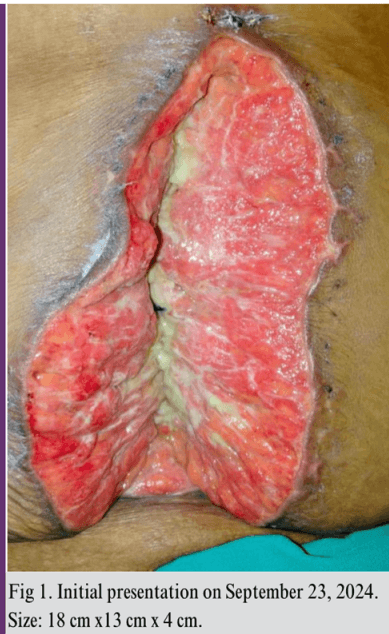
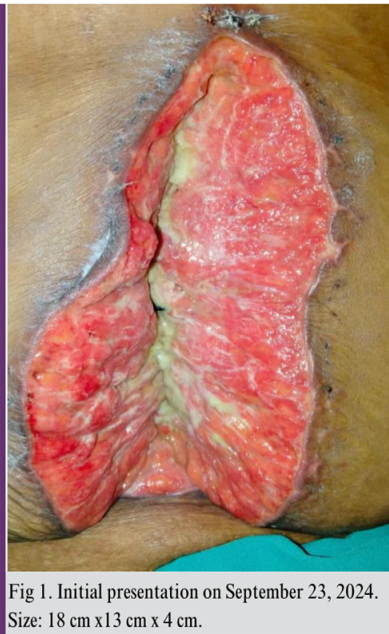 Patient about to receive NPWT-i therapy.
Setting & Users: This hospital-based evaluation allowed multiple clinicians to test usability and patient response. An intuitive multilingual touchscreen interface supported rapid adoption at the bedside.
Device Features: The platform combines linear infusion for predictable solution delivery with denser reticulated foam intended to improve wound-bed contact and fluid distribution.
Change Interval: Dressings were changed approximately every 3 days during evaluation.
Results
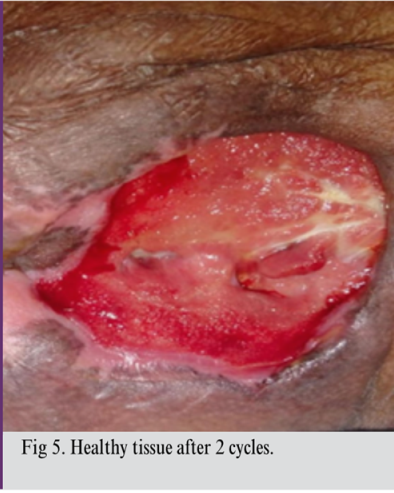 Same patient after three weeks of NPWT-i treatment.
All 30 patients tolerated therapy with no reported device-related adverse events. Clinicians described rapid granulation, more uniform fill-in of cavities, and less pocketing compared with prior experience using standard NPWT.
Duration: No case required more than two weeks of NPWTi-d. Many patients transitioned to grafting or surgical closure after a single treatment cycle once the wound bed had granulated and bioburden was controlled.
Starting Parameters Used Locally: Instillation was scheduled every 2–4 hours with an initial volume target of approximately one-third of the calculated wound volume per cycle.
Evidence Context
The EWMA 2024 NPWT update and international NPWTi-d consensus describe NPWTi-d as an adjunct option for complex, contaminated, or infected wounds once adequate debridement is achieved. They typically recommend approximately 10-minute dwell times, 2–4-hour negative-pressure phases at −125 mmHg, and normal saline as first-line instillation solution.
A 2023 orthoplastic meta-analysis found NPWTi-d superior to NPWT or conventional dressings for complete wound closure and reduced complications.
Clinician-Ready Protocol
1) Indications & Triage
Consider NPWTi-d when rapid bed optimization is needed—particularly for bioburden management, slough reduction, and uniform granulation before definitive closure or grafting.
2) Set-Up & Parameters
- Solution: Start with normal saline (0.9%) unless a specific antiseptic is indicated.
- Volume: Begin at roughly one-third of wound volume per cycle.
- Dwell Time: Aim for approximately 10 minutes of dwell per cycle.
- Cycle Interval: Program cycles every 2–4 hours.
- Negative Pressure: Commonly −125 mmHg during the suction phase.
3) Dressing Management
Use denser or wound-specific foam to achieve full contact with the bed. Change interval: every 3 days in this cohort.
4) Decision Points
After one cycle (~3–7 days): If granulation is uniform, pockets are reduced, and exudate or odor are controlled, consider proceeding to closure or grafting.
Bottom Line
In this 30-patient Kuala Lumpur cohort, a new NPWTi-d platform was associated with rapid, uniform granulation, no reported device-related adverse events, and frequent readiness for closure after a single treatment cycle. Starting with normal saline, approximately 10-minute dwell times, 2–4-hour cycles, and instilled volumes around one-third of wound volume aligns with contemporary consensus guidance.
References
- NPWTi-d 30-patient evaluation. Kuala Lumpur. 2025.
- EWMA 2024 NPWT update.
- International NPWTi-d consensus guidelines.
- Orthoplastic meta-analysis of NPWTi-d vs NPWT. 2023.