
ESWT for Diabetic Foot Ulcers: Faster Healing With Broad-Focused Shockwaves
Evidence supports broad-focused extracorporeal shockwave therapy as a safe, noninvasive adjunct for stalled Wagner 1–3 diabetic foot ulcers.
Damon Ebanks
Medipyxis
Medical education note: This article is for clinicians and is not a substitute for patient-specific medical advice.
Quick Take
A recent 10-patient case series reported high closure rates and pain reduction when broad-focused extracorporeal shockwave therapy (ESWT) was added to standard diabetic foot ulcer care. While small, these results align with newer meta-analyses showing ESWT can increase complete healing versus standard care alone. Guidelines haven't fully embraced ESWT for routine use yet, but evidence suggests it's a safe, noninvasive adjunct for stalled Wagner 1–3 wounds when best-practice care plateaus.
What Is Broad-Focused ESWT—and Why It Helps Wounds
ESWT delivers acoustic energy triggering healing signals: improved micro-perfusion, angiogenesis through VEGF up-regulation, enhanced fibroblast and keratinocyte activity, and inflammation modulation. These mechanisms help chronic, ischemic-neuropathic diabetic foot ulcers transition back into healing. Broad-focused devices spread therapeutic energy evenly across larger, irregular ulcer beds and surrounding tissue—useful when wounds aren't neatly focal.
What the Case Series Showed
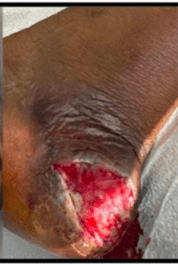
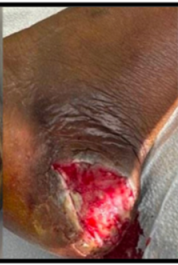 Chronic Wagner 1–3 diabetic foot ulcer not closing after 4–6 weeks of optimal care.
Population: Adults with chronic Wagner grade 1–3 diabetic foot ulcers not healing on standard care.
Intervention: Broad-focused ESWT as an adjunct (multiple sessions over ~8–12 weeks) plus debridement, moisture-balanced dressings, and offloading.
Signals Observed: High proportion of complete closures within ~12 weeks, marked pain reduction, and no device-related adverse events reported.
How This Lines Up with Controlled Evidence
Meta-analyses and randomized controlled trial syntheses (2019–2025) report that adding ESWT to standard diabetic foot ulcer care increases odds of complete healing and accelerates wound-size reduction versus control care. Recent pooled estimates suggest significantly higher complete-healing rates with ESWT and larger re-epithelialization gains.
A 2024 meta-analysis and 2025 PRISMA review both reinforce the signal for improved closure versus standard care—and in some analyses, versus hyperbaric oxygen therapy. Press coverage of pooled data highlights approximately 3× higher complete-healing likelihood with ESWT added to standard care.
Practical Protocol: What Clinicians Actually Do
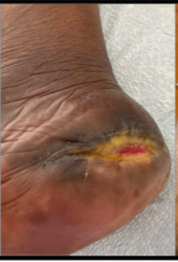 Diabetic foot ulcer after 12 weeks of optimal care with ESWT adjunct.
Candidate Wounds
Chronic Wagner 1–3 diabetic foot ulcers not closing after 4–6 weeks of optimal care (debridement, infection control, offloading, moisture balance; vascular assessment/intervention as indicated).
Treatment Parameters Reported Across Studies
- Energy flux density: ~0.10–0.25 mJ/mm²
- Pulses/session: ~1,500–2,500
- Frequency: ~3–4 Hz
- Schedule: Weekly or bi-weekly; 6–10 sessions over 8–12 weeks, integrated with standard DFU care
Safety & Tolerability
Outpatient treatment typically requires no anesthesia; reported adverse events are rare and mild in controlled studies. Continue infection surveillance and glycemic optimization.
Where ESWT Fits in Your Algorithm
- Optimize the basics: Vascular workup/revascularization when needed; debridement cadence; moisture-balanced dressings; offloading adherence; infection control.
- Reassess at 4–6 weeks: If stalled, discuss adjuncts. ESWT is a noninvasive option with increasing supportive data.
- Select cases thoughtfully: Neuropathic or neuro-ischemic DFUs without uncontrolled infection or critical ischemia.
- Track outcomes: Wound-area reduction at 2–4 weeks after starting ESWT is a good leading indicator.
Limitations
- Some trials are small and heterogeneous (devices, dosing, endpoints).
- Not all guidelines endorse routine use yet.
- Coverage varies; document standard care optimization and prior nonhealing to support medical necessity.
Bottom Line
Broad-focused ESWT case series mirror an emerging evidence trend: adding ESWT to optimized DFU care can increase complete healing and reduce pain, with an excellent safety profile. Use it selectively after standard care plateaus and document parameters and outcomes.
References
- ESWT for Diabetic Foot Ulcers: 10-patient case series. SAWC Fall 2025 abstract.
- IWGDF 2023 Wound-Healing Interventions Guideline.
- ESWT vs standard care for DFUs: 2024 meta-analysis.
- ESWT for chronic wounds: 2025 PRISMA review.