
Wearable Technology for Wound Care: What's Here Now
Which wearable wound care technologies are clinically available in 2026, from smart bandages to pressure sensors, and what remains experimental.
Damon Ebanks
Medipyxis
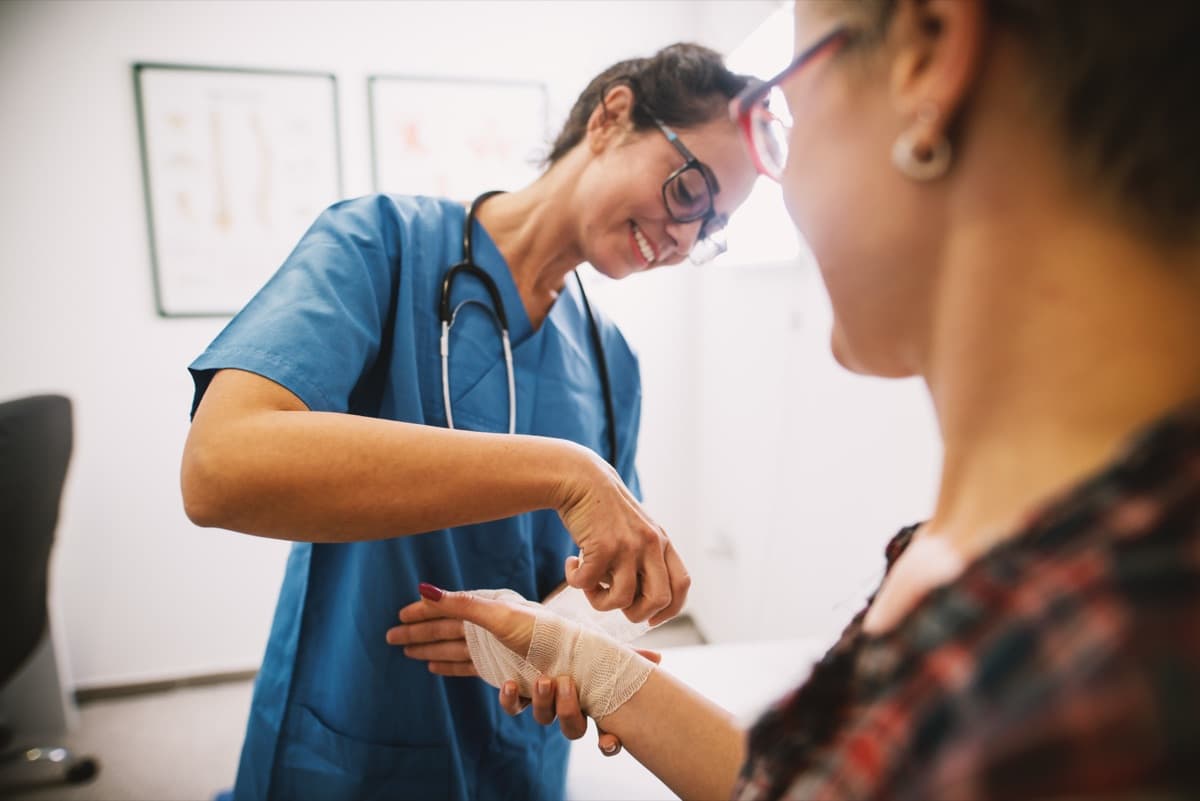
Wearable Technology for Wound Care in 2026
Wearable technology for wound care sits at an interesting inflection point. Some devices are commercially available and producing real clinical data. Others are still working through regulatory clearance. A few remain firmly in the research lab despite years of conference presentations. For wound care practices evaluating these technologies, the critical question is not "what's possible?" but "what can I actually use with my patients today?"
This post covers the current landscape of wearable wound care devices: what is available, what the clinical evidence shows, and where the practical limitations are. For other technology developments in the field, see AI in Wound Care 2026 and Remote Patient Monitoring for Wound Care.
Smart Bandages and Wound-Monitoring Dressings
Smart bandages represent the most direct application of wearable technology to wound management. These are dressings embedded with sensors that monitor wound conditions between clinical visits.
What the Sensors Measure
Current smart bandage prototypes and early commercial products can monitor several wound parameters:
- Moisture levels. Excessive moisture leads to maceration; insufficient moisture impairs healing. Sensors detect when the wound bed is too wet or too dry, potentially triggering a dressing change alert.
- pH levels. Wound bed pH correlates with healing status. Chronic non-healing wounds tend to have elevated pH compared to acute wounds progressing normally. A pH shift can indicate infection or biofilm formation.
- Temperature. Localized temperature changes can signal infection before other clinical signs appear. A temperature increase of 1-2 degrees Fahrenheit at the wound site compared to surrounding tissue is a recognized early infection indicator.
Clinical Availability
Most smart bandage systems are still in clinical trials or early limited commercial release as of mid-2026. A few research-grade systems are available for institutional use, primarily in academic wound care centers. The technology is not yet at the point where a typical wound care practice can order smart bandages from their usual supply distributor.
Cost remains a barrier. Even early commercial products carry per-unit costs significantly higher than standard advanced dressings. Until manufacturing scales and reimbursement pathways develop, widespread adoption is unlikely.
Pressure-Sensing Devices for Injury Prevention
Pressure injury prevention is one area where wearable technology has moved further toward practical clinical use. These devices focus on monitoring and redistributing pressure in at-risk patients.
Wheelchair and Mattress Pressure Mapping
Pressure mapping systems embedded in wheelchair cushions and hospital mattresses are the most mature wearable-adjacent technology in wound care. These systems use arrays of pressure sensors to create real-time maps of pressure distribution, identifying areas of sustained high pressure that put patients at risk for pressure injuries.
What is available now: Several commercial pressure mapping systems are in clinical use in hospitals and long-term care facilities. These products display pressure maps on a monitor or tablet, allowing caregivers to see where a patient needs repositioning. Some systems include automated alerts when pressure thresholds are exceeded for defined time periods.
Clinical evidence: Published studies show that pressure mapping combined with repositioning protocols reduces pressure injury incidence. The challenge is compliance. The technology works when clinical staff respond to the alerts. In understaffed facilities, alerts that go unacknowledged do not prevent injuries.
Wearable Activity and Position Monitors
Simpler wearable devices track patient activity levels and position changes. For patients at risk of pressure injuries, these monitors can detect how often a patient changes position, whether they are spending extended periods in one position, and whether prescribed repositioning schedules are being followed.
These devices are commercially available and relatively affordable. They provide useful data for care coordination, particularly for home health wound care patients where clinicians cannot directly observe patient activity between visits.
Continuous Glucose Monitors and Wound Healing
Continuous glucose monitors (CGMs) are not wound care devices, but they have significant relevance for wound care clinicians managing diabetic patients with chronic wounds.
The Connection to Wound Healing
Uncontrolled blood glucose directly impairs wound healing. CGMs provide continuous data on glucose levels, revealing patterns that point-of-care HbA1c tests miss: post-meal spikes, overnight hypoglycemia, time in range, and glucose variability. For a wound care clinician managing a diabetic foot ulcer, this data adds context to healing trajectory assessment.
A patient whose wound is not progressing despite appropriate local wound care may have a glycemic control problem that is not visible in quarterly HbA1c measurements. CGM data can surface that problem in real time.
Practical Integration
CGM data is typically managed by the patient's endocrinologist or primary care provider. Wound care practices that want to incorporate CGM data into their clinical decision-making need to establish data-sharing workflows with the prescribing provider. This is a coordination challenge, not a technology problem. The data exists; getting it into the wound care clinician's hands at the point of care is the gap.
Clinical Utility Assessment: What to Ask Before Adopting
For wound care practices evaluating any wearable technology, these questions separate useful tools from expensive experiments:
- Is it FDA-cleared for the intended use? Research devices and consumer wellness products have different regulatory standards than medical devices. Know what category the product falls into.
- What does the clinical evidence show? Peer-reviewed studies with wound healing endpoints, not just sensor accuracy data or feasibility studies.
- How does the data reach the clinician? A sensor that generates data nobody reviews has zero clinical value. Integration with your EMR or a practical notification workflow is essential.
- What is the per-patient cost, and is there a reimbursement pathway? RPM billing codes (CPT 99453, 99454, 99457, 99458) may apply for some wearable monitoring, but coverage varies by payer and device type.
- Does it change a clinical decision? If the data from a wearable device does not lead to a different treatment action than what you would do without it, the device adds cost without adding value.
Key Takeaways
- Smart bandages that monitor wound moisture, pH, and temperature are progressing but remain largely in clinical trials and limited commercial release as of 2026
- Pressure-sensing systems for mattresses and wheelchairs are the most clinically mature wearable wound care technology, with published evidence supporting pressure injury reduction
- Continuous glucose monitor data is highly relevant for managing diabetic wound patients but requires care coordination workflows to reach wound care clinicians
- Before adopting any wearable device, practices should evaluate FDA clearance status, clinical evidence quality, data integration pathways, and whether the data actually changes clinical decisions
- Reimbursement for wearable monitoring in wound care is evolving; RPM billing codes may apply but coverage is not universal across payers