
Topical Wound Oxygen Therapy: Billing and Coverage 2026
How to bill topical wound oxygen therapy under Medicare in 2026, including HCPCS codes, LCD requirements, documentation, and prior authorization strategies.
Damon Ebanks
Medipyxis
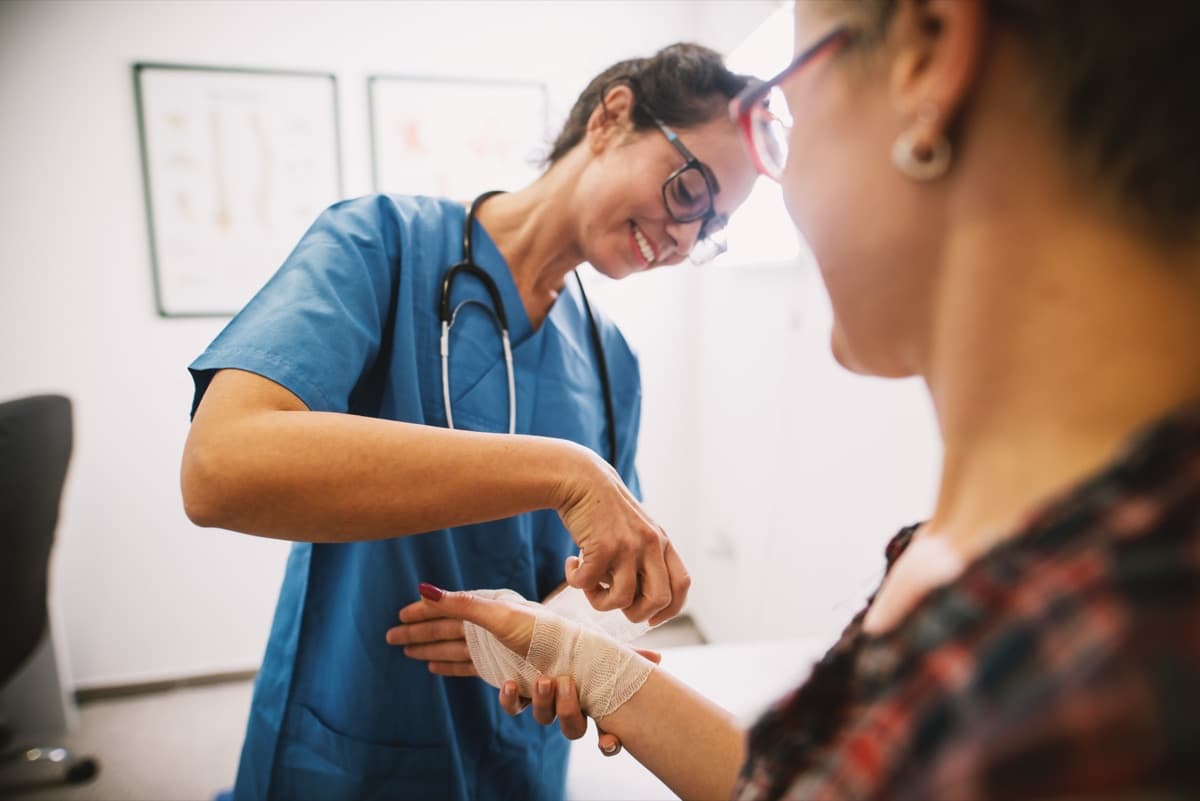
Topical wound oxygen (TWO2) therapy sits in an uncomfortable billing middle ground that trips up even experienced wound care billers. It's not hyperbaric oxygen therapy (HBO) — the pressure, the chamber, and the CPT codes are completely different. It's not a skin substitute. It's not standard NPWT. It has its own HCPCS code, its own local coverage landscape, and its own documentation requirements. If you're using topical oxygen in your practice and billing it as a generic supply or not billing it at all, you're leaving money on the table and creating audit exposure.
This guide covers what topical wound oxygen therapy is, how Medicare covers it in 2026, what HCPCS codes apply, and what your documentation must show to survive a review.
What Topical Wound Oxygen Therapy Actually Is
Topical wound oxygen therapy delivers humidified, pressurized oxygen directly to the wound bed using a disposable canister or cyclical chamber system worn on the affected limb. The mechanism differs from hyperbaric oxygen: TWO2 operates at pressures near or slightly above ambient atmospheric levels (typically 1.04 atm), targeting local tissue oxygenation rather than systemic oxygen saturation.
Two main delivery systems dominate the market:
Continuous diffusion oxygen (CDO): A small canister adhered to or surrounding the wound continuously emits oxygen through a semipermeable membrane. HCPCS A9272 (oxygen and supplies, self-administered, per month) is the billing vehicle most commonly used, though MAC interpretation varies.
Cyclic pressurized oxygen: A small soft chamber covers the wound and inflates with humidified oxygen on a timed cycle. Some systems carry device-specific HCPCS codes under the A-code or E-code range depending on how the MAC classifies the product.
Know which device you're using before you bill — the HCPCS code drives the MAC's coverage determination, and incorrect code assignment is a top denial reason.
Medicare Coverage Status in 2026
Medicare's coverage of topical wound oxygen therapy is not uniform nationally. Unlike hyperbaric oxygen, there is no National Coverage Determination (NCD) governing TWO2. Coverage depends entirely on your MAC's Local Coverage Determination (LCD).
As of 2026:
- Novitas Solutions (JH and JL jurisdictions — mid-Atlantic and southeast): No affirmative LCD for TWO2. Claims submitted without an active LCD are adjudicated under the general reasonableness standard — difficult to win on appeal.
- Palmetto GBA (JM and JJ jurisdictions): Similarly silent on TWO2 in published LCDs. Providers are billing under the general medical necessity framework.
- Noridian (JE and JF jurisdictions — northwest and southwest): Has acknowledged TWO2 in limited coverage articles but no full LCD as of this writing.
- CGS Administrators (JM for home health/hospice, J15): Evaluate case by case.
Practical implication: Check your MAC's coverage documents before you start billing TWO2 in volume. Without an affirmative LCD, you're dependent on documentation demonstrating that the patient failed standard wound care, and that TWO2 is reasonable and necessary — a harder standard to satisfy on appeal than a covered LCD criterion.
For reference on navigating your MAC's LCD landscape, see the wound care LCD compliance guide.
HCPCS Codes for Topical Oxygen Therapy
| Code | Description | Use When |
|---|---|---|
| A9272 | Oxygen and supplies for home use, per month (self-administered) | CDO canister systems dispensed for home use |
| E0446 | Topical application of non-contact, low-frequency ultrasound (misused — do NOT use for oxygen) | Not applicable to TWO2 |
| A6000-A6530 | Wound dressings | Only if wound dressing is billed separately from the oxygen system |
Important: A9272 is primarily a DME code designed for home oxygen. When applied to TWO2 delivered in a clinical setting or through a mobile wound care visit, the billing model differs from how you'd bill a CPAP or home oxygen concentrator. Many MACs require the device itself to be billed through a DMEPOS supplier, not a professional services claim.
If you're providing TWO2 as part of a mobile wound care visit:
- The professional service (E/M or wound management CPT) goes on the CMS-1500
- The oxygen system or supplies may require a separate DMEPOS claim through an enrolled supplier
- Bundling rules under NCCI apply — review before billing both a debridement CPT and TWO2 supplies on the same date of service
For a full walkthrough of CPT and HCPCS billing interactions in wound care, see the wound care CPT codes 2026 guide.
Documentation Requirements for Topical Wound Oxygen Therapy
Because TWO2 lacks a standardized national LCD, your documentation needs to do heavy lifting. These are the elements that define medical necessity and create a defensible record:
Why Standard Wound Care Failed
You must document that the patient's wound has not responded to standard wound care. "Standard wound care" for a diabetic foot ulcer means at minimum:
- Appropriate offloading
- Moisture-balanced dressings
- Debridement as indicated
- Infection control
- Glycemic optimization efforts
Document the wound's trajectory — size, depth, tissue type, exudate — over a period of four or more weeks showing inadequate healing progress. Quantify: "wound area reduced by less than 40% over four weeks despite [specific interventions]" is far more defensible than "wound not healing."
Vascular Assessment
For lower extremity wounds, confirm adequate perfusion. Document ABI results or toe pressure measurements. A wound that isn't healing because of critical limb ischemia won't respond to TWO2, and Medicare reviewers will question why you chose topical oxygen over addressing the perfusion deficit.
Wound Measurements at Baseline and Each Visit
Photograph and measure the wound at every visit. Document the probe-to-bone test result for DFUs. Note tissue type percentages (granulation, slough, necrotic). This baseline creates the before/after evidence that justifies continued TWO2 therapy.
Frequency and Duration
Document how often the patient applies the device at home (for CDO systems) or how frequently the clinical team delivers treatment. Most TWO2 protocols run four to six weeks with reassessment at week four. Document reassessment findings and the rationale for continuing or discontinuing.
For documentation requirements more broadly, see the wound care documentation checklist and medical necessity documentation guide.
How Topical Oxygen Differs from Hyperbaric Oxygen Therapy for Billing Purposes
Providers transitioning patients between TWO2 and HBO need to understand these are not interchangeable payers.
| Factor | Topical Oxygen (TWO2) | Hyperbaric Oxygen (HBO) |
|---|---|---|
| CPT/HCPCS | A9272 (HCPCS) | 99183 (CPT) — physician supervision |
| Setting | Home, SNF, mobile visit | Hospital or outpatient HBO chamber |
| Pressure | Near-ambient (1.0–1.04 atm) | 2.0–3.0 atm |
| NCD | None | NCD 20.29 governs |
| Coverage evidence | Emerging; LCD-dependent | Established for select indications |
| Prior auth (MA plans) | Increasingly required | Frequently required |
You cannot substitute TWO2 when a patient qualifies for HBO under NCD 20.29, then bill TWO2 as if it were HBO-equivalent. They're clinically and payer-wise distinct. For more on HBO billing and referral decisions, see the hyperbaric oxygen referral guide.
Prior Authorization and Medicare Advantage Plans
Most Medicare Advantage plans do not follow traditional Medicare's silence on TWO2 — they have their own prior authorization requirements and formulary-style approval processes. Before starting TWO2:
- Verify the patient's MA plan coverage for TWO2 or oxygen therapy devices
- Submit prior authorization with clinical notes documenting treatment failure
- Include objective wound measurements and the specific device you intend to use
- Reference any published evidence supporting TWO2 for the patient's wound type
Plans increasingly require that TWO2 be listed as a covered item in their formulary or DME coverage list before approving. Don't assume MA coverage mirrors traditional Medicare even for codes Medicare does cover.
Billing TWO2 in a Mobile Wound Care Practice
Mobile wound care providers face a structural challenge: the TWO2 device is often a patient-use system the patient keeps between visits, not something performed by the clinician at the bedside. That shifts the billing model:
If your practice supplies the device and consumables:
- You may need DMEPOS supplier enrollment
- The device and supplies bill through DMEPOS HCPCS codes, not the professional claim
- Your professional visit bills the wound management CPT separately
If you're prescribing and the patient obtains through a DME supplier:
- Your role is documentation and prescription — the supplier bills HCPCS
- Your clinical notes support the supplier's DME claim and must align with their billing
If you're providing TWO2 in a SNF:
- Part A consolidated billing rules may bundle TWO2 supplies into the SNF per diem
- Bill the SNF directly; the SNF bundles into their consolidated billing
- Do not separately bill HCPCS on a Part B claim while the patient is under Part A
This last point catches providers repeatedly. If you're unsure how TWO2 billing interacts with SNF Part A, review the wound care billing guide for SNF-specific billing rules.
Key Takeaways
- Topical wound oxygen therapy (TWO2) is not HBO — they use different CPT/HCPCS codes, billing settings, and coverage frameworks. Never conflate them in documentation or billing.
- No national NCD governs TWO2 — coverage depends on your MAC's LCD, which means you must confirm coverage with your specific MAC before billing in volume.
- HCPCS A9272 is the most common billing vehicle for CDO systems, but DMEPOS supplier enrollment may be required if your practice is supplying the device.
- Documentation must establish treatment failure — show objective wound measurement data over at least four weeks of standard wound care before justifying TWO2.
- Medicare Advantage plans require prior authorization and their own coverage determination separate from traditional Medicare; always verify before initiating therapy.
- SNF Part A billing consolidation can prevent separate professional billing for TWO2 supplies — know your patient's payer status before billing.
Have questions about billing topical wound oxygen therapy in your mobile or facility-based practice? Connect with Medipyxis to see how our documentation platform supports TWO2 workflow and payer compliance.