
Documentation Completeness Mini-Audit Sheet for Wound Care
Comprehensive wound care documentation audit checklist for verifying bill-ready, audit-defensible clinical encounters with scoring rubrics.
Damon Ebanks
Medipyxis
How to Use (Operator Standard)
- Sample: 3 notes per clinician per week OR 5–10% of encounters
- Timebox: 10 minutes per note
- Outcome: PASS / PASS w/ MINOR / FAIL–REWORK / FAIL–BILL HOLD / FAIL–COMPLIANCE REVIEW
- Hard Stops: Any Critical item missing = FAIL
Scoring + Severity
Score each item: 2 = Complete | 1 = Partial/Needs improvement | 0 = Missing/Incorrect | N/A = Not applicable
Severity tags:
- CRITICAL (Hard Stop): Missing = FAIL
- MAJOR: Missing often causes denials / rework
- MINOR: Quality issue, usually not denial-driving
Mini-Audit Checklist (Operator Grade)
A) Identity, Consent, Timeliness (CRITICAL)
- Correct patient identity (name/DOB or MRN matched)
- DOS documented correctly
- Note signed + credentialed (attestation present)
- Note completed within policy SLA (e.g., same day/24h)
- Place of service documented/consistent with setting
- Consent/POA documented if required
B) Medical Necessity & Clinical Story
- Reason for visit / chief complaint documented
- Interval history (what changed since last visit)
- Infection assessment documented (present/absent + details)
- Comorbidities / barriers noted when relevant
- Assessment links to plan (clear clinical rationale)
C) Wound Inventory & Assessment (CRITICAL)
If multiple wounds: auditor verifies each treated wound has a complete assessment.
- All active/treated wounds listed (no missing wounds)
- Wound location + laterality accurate
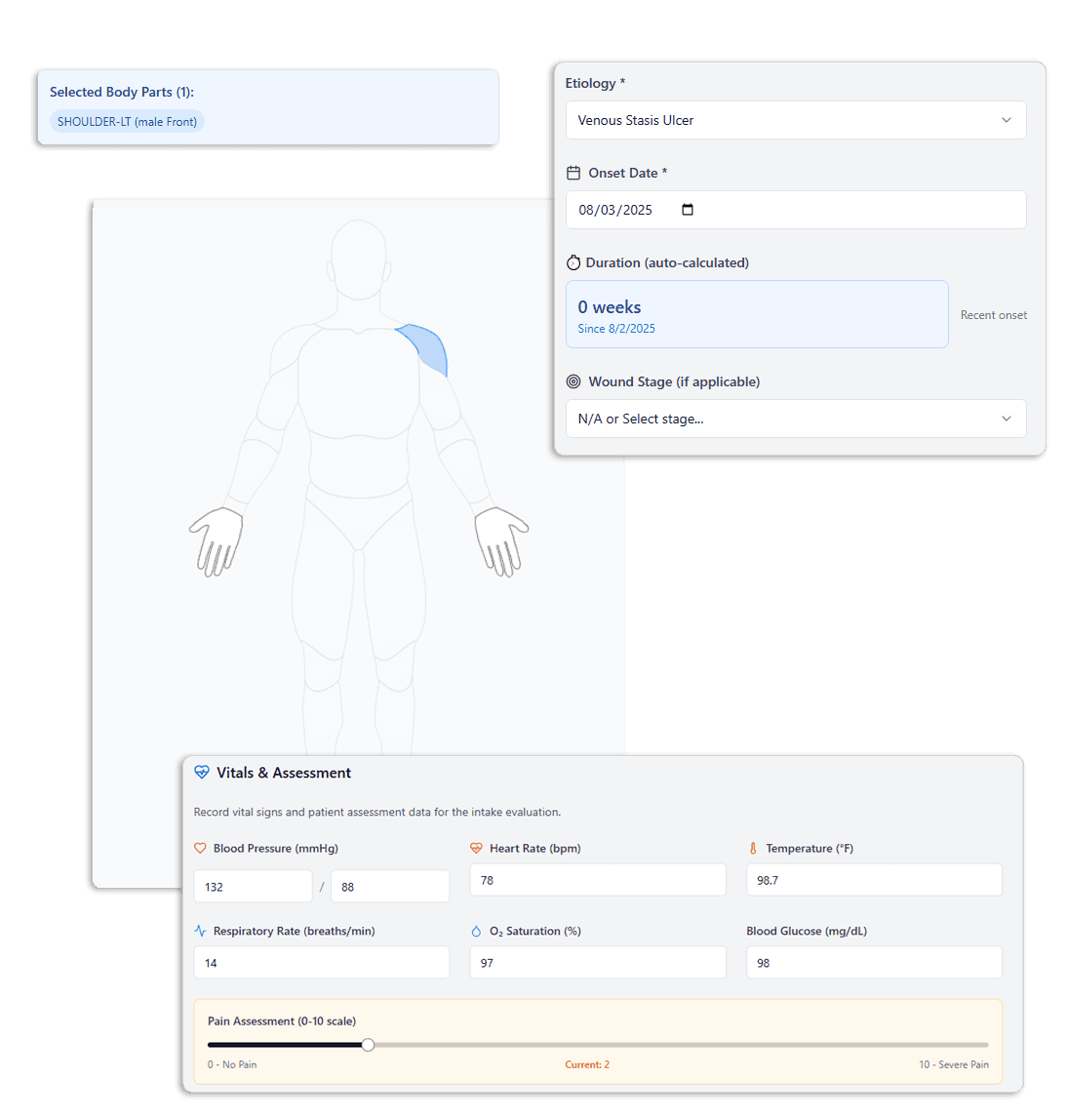
- Etiology/type documented (DFU/VLU/pressure/surgical/trauma/etc.)
- Measurements documented (L×W×D) for each wound
- Undermining/tunneling documented when present
- Wound bed/exudate/odor/periwound documented
- Pain documented
- Progress statement supported by data
D) Photos & Attachments (Policy-Dependent)
- Photo attached per program/payer policy
- Photo labeled/linked to wound/date appropriately
- External docs indexed if used to justify care
E) Procedures (Debridement / I&D / etc.)
Only complete if a procedure was performed or billed.
- Procedure clearly indicated with medical necessity
- Procedure type/method documented (sharp, curette, etc.)
- Tissue removed documented (devitalized tissue/slough/necrosis)
- Anesthesia (if used) documented
- Hemostasis documented
- Patient tolerance/complications documented
- Measurement/area/units documented as required
- Pre/post condition documented
F) Advanced Products (CTP/Skin Substitute)
Only complete if CTP/advanced product used or billed.
- Eligibility/medical necessity narrative present
- Conservative care history + response documented
- Serial measurements evidence present (baseline + progression)
- Product name/category documented
- Product size/units documented
- Lot/serial + expiration documented (traceability)
- Waste documented with reason (if applicable)
- Episode plan (follow-up cadence, stop rules)
G) NPWT
Only complete if NPWT managed or billed.
- Indication/appropriateness documented
- Device settings documented (pressure, continuous/intermittent)
- Seal integrity / canister output notes
- Troubleshooting/education documented
- DME responsibility clarified
H) Plan, Orders, Education, Follow-Up
- Dressing orders clear (cleanse + primary/secondary + frequency)
- Offloading/compression plan documented when appropriate
- Patient/facility education documented
- Follow-up timeframe documented
- Referrals/labs/imaging orders documented when indicated
- Closed-loop communication documented
I) Billing Alignment Pre-Check (CRITICAL)
This is where "complete note" becomes "bill-ready note."
- Diagnosis supports services rendered (ICD aligns with story)
- CPT/procedure billed is supported by documentation
- Units/area/quantity align with what's documented
- Modifiers supported (if used)
- Auth/ABN requirements satisfied
- No copy-forward contradictions
Hard Stop Items (Auto-FAIL)
If any are missing/incorrect, mark FAIL and indicate action:
- Unsigned note / missing credentials
- Wrong patient or missing DOS
- Missing wound measurements for treated wound(s)
- Procedure billed but procedure note incomplete
- Advanced product used/billed without size/units + lot/traceability
- Documentation does not support billed service(s)
- Required auth absent/out of date range
- Material contradiction (wrong laterality/site; copy-forward errors)
Findings Summary (Operator Coding)
Primary Defect Category (pick up to 2)
- Measurements missing/incomplete
- Photo missing/failed upload
- Procedure note incomplete
- Advanced product traceability missing
- Medical necessity unclear
- Plan/orders unclear
- Billing mismatch (Dx/CPT/units/modifiers)
- Signature/timeliness
- Copy-forward contradiction
- Auth/ABN issue
Root Cause Code (pick one)
- Training gap
- Template/workflow friction
- Time pressure / end-of-day backlog
- Connectivity/outage
- Product/inventory workflow gap
- Documentation habit (copy-forward)
- Payer/policy confusion
- System configuration issue
Corrective Action (closed-loop)
- Action required: Addendum / Coding correction / Bill hold / Coaching / Retraining / Template change / Compliance review
- Owner / Due date / Resolved date / Resolution notes
Bottom Line
Documentation audits convert routine note review into a measurable, repeatable revenue-protection workflow. Use this template weekly per clinician to catch the issues that turn into denials—before they leave your office.